Feng Shui When Buying a House: What to Check Before You Buy
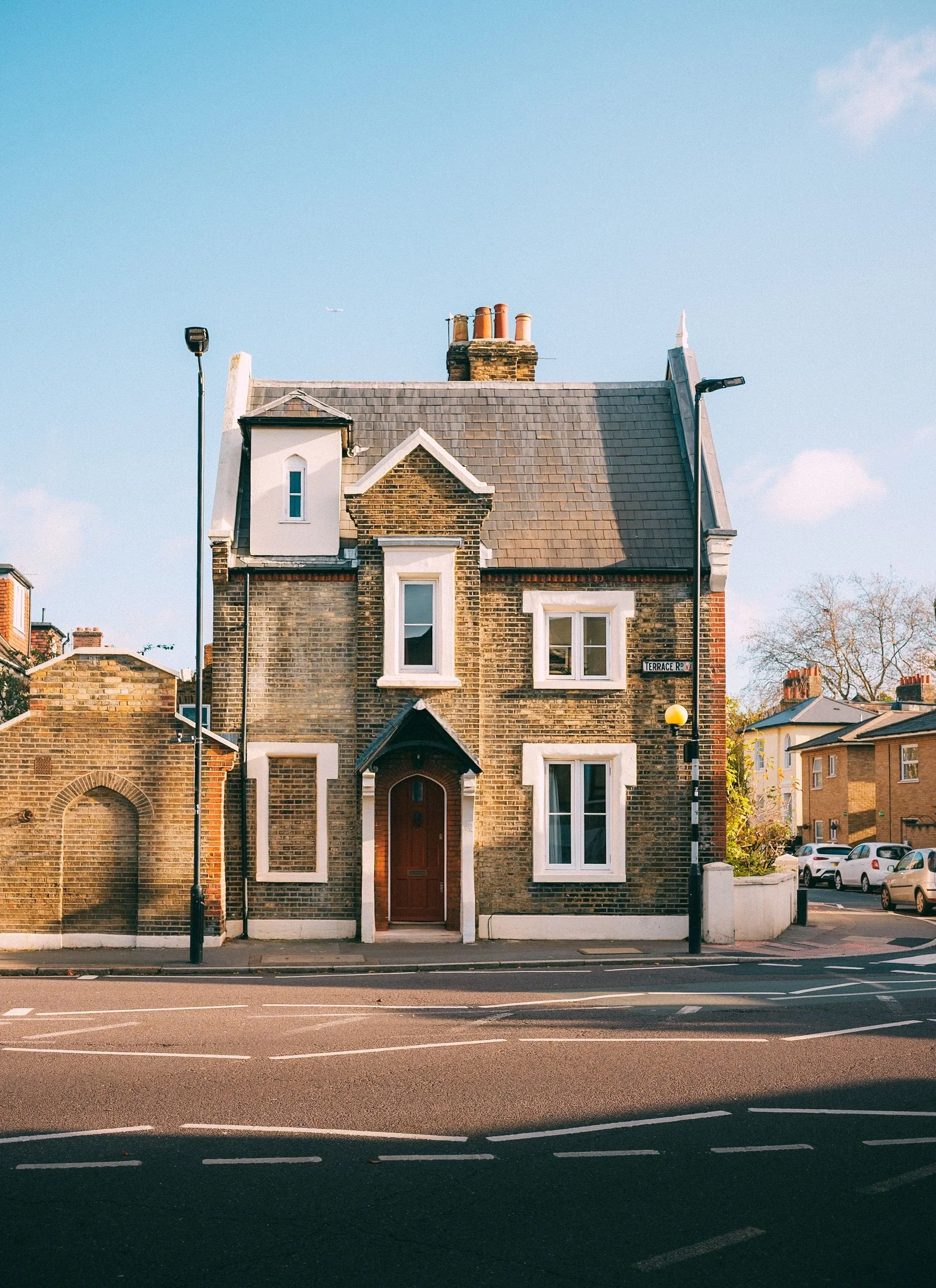
Buying a home? What to check first with Feng Shui
Feng Shui when buying a house starts outside the front door, with the road, the land, and the buildings around the property. This article explains what to check before you make an offer and which problems redecorating will never fix.
You've fallen for the kitchen. The viewing went well, the agent is ringing you twice a day, and you can already picture Sunday lunch round that island. Then someone asks what's outside, and you realise you barely looked.
Most buyers check the roof, the damp and the boiler. Very few notice the road that points straight at the front door or the electricity pylon humming behind the garden. I'll walk you through what I check first, in the order I check it, so you can look at a street with fresh eyes.
I'm a Classical Feng Shui consultant and Chinese Astrology specialist. I trained in Feng Shui Mastery at Mastery Academy of Chinese Metaphysics in Malaysia and in Chue Style Feng Shui with the Chue Foundation, and I've been advising clients since 2010.
As a leading Feng Shui consultant in London working across the South East and online worldwide, I spend my days exploring the relationship between people and the spaces they live in.
And when it comes to buying a home, what’s outside the front door can reveal more than you might expect.
Over the years I've worked with many people before they bought a property or signed a tenancy agreement. Some call me with a gut feeling they can't explain. Others have a shortlist of three homes and can't choose. Renters ask me too, because a twelve month lease is still a year of your life in that building. Whichever it is, the same few checks tell us a great deal, and I'll share them below.
Why Does Feng Shui Start With the Land Rather Than the Interior?
Classical Feng Shui begins with the landform. It looks at the hills, roads, water and buildings that shape how Qi (energy) gathers around a property.
The reason is practical. You can repaint a bedroom in a weekend. You can't move a dual carriageway.
Everything inside a home sits within the setting outside it. A beautifully arranged house on a poor site is like a well laid table in a draughty corridor. The details help, but the corridor is still a corridor.
I check every property with my luo pan, the traditional Feng Shui compass. It tells me the exact direction the house faces and the exact position of the land and buildings around it. This is one of the most important steps in any assessment.
I touched on this in an earlier post, my No.1 Feng Shui tip when buying a home.
4 Feng Shui Checks to Make Before Buying a House
Walk the street before you walk the house. Four things matter most.
1. The road approach
Stand at the front door and look along the road. A road that runs straight at the house, such as at the top of a T junction, sends fast, forceful Qi towards the door. Classical Feng Shui calls this ‘sha qi’. Residents often describe it as a feeling of being under pressure at home without knowing why.
Gentle curves are kinder. A road that curves past the front of the house holds the Qi rather than firing it.
2. What stands behind the house
A solid backing gives support. In landform terms, this is the Black Tortoise position. It might be a hill, a rise in the ground, a taller building or a mature belt of trees.
An open drop, a busy road or a gap behind the property leaves the household feeling unsupported. I see this show up in finances and in people's sense of security.
3. What sits in front of the house
The front should be open enough for the Qi to settle, which classical texts call the ‘bright hall’. A pleasant open space, a modest garden, or a gentle view works well.
A wall, a large building or a blocked outlook right outside the door cramps everything. You'll often notice it as a heaviness the moment you step outside in the morning.
4. Structures nearby
Look for anything with sharp edges or heavy presence aimed at the property:
Pylons and electricity substations
Sharp building corners pointing at the windows or door
Large drains or running water close to the entrance
Hospitals or cemeteries within sight.
None of these automatically rules a house out. Distance, angle and size all change the picture. However, they all deserve a note on your viewing list.
What Can You Fix Later and What Can't You?
This is the question I'm asked most. Sorting a property into ‘fixable’ and ‘fixed’ before you commit saves a lot of heartache.
Fixed, so weigh these carefully before offering:
The road, the junction and the surrounding landform
The direction the house faces, which I confirm with my compass
The position of the front door within the building
Large structures nearby such as pylons and tall neighbouring buildings
Staircases that run straight down to the front door in a layout you can't alter
Adjustable after you move in:
Which room you use as the bedroom or office
Furniture placement and the position of your bed and desk
Colour, lighting, and materials
The flow and movement of Qi through the house
Planting and screening at the front.
A good consultant helps you choose the best rooms for each person and strengthens what's already working. A consultant can't turn a poor site into a good one.
How Can You Check a Property Yourself Before Booking a Consultation?
You can gather a lot of useful information in an afternoon.
Visit twice. Go once on a weekday morning and once in the evening. Noise, traffic and the atmosphere of the street change completely.
Walk the whole street. Start at the end of the road and approach the house the way you'd arrive each day.
Stand at the front door and look out. Note what faces you directly.
Walk to the back garden. Check what stands behind the house and what lies beyond the fence.
Notice your body. Do your shoulders drop or tighten? Do you want to linger or leave? Your first reaction is useful data.
Photograph everything. Include the junction, the neighbouring buildings and the view from each main window.
A Feng Shui client in north west London once fell in love with a gorgeous Georgian house. Beautiful rooms, a generous garden. We found a major road pointing directly at the front door and a hospital car park rising behind the back fence. She walked away and found a quieter home two streets over. Six months later she told me she sleeps better than she has in years and she’s never been happier.
Frequently Asked Questions
Does Feng Shui really matter when buying a house?
Feng Shui is a traditional way of reading how a site and building support the people living in it. Many buyers use it as an extra layer of due diligence alongside a survey. It gives you a structured way to assess the setting before you commit.
What is the first thing a Feng Shui consultant looks at in a house?
The land and the approach. I look at the road, the surrounding buildings and what sits behind and in front of the property before I enter the home. I then use my luo pan (Chinese compass) to check the direction the house faces and the location of everything around it.
Is it bad Feng Shui to live at the end of a road?
It depends on the shape of the road and the position of the house. A property at a T junction facing the oncoming road tends to be more challenging. A house tucked at the end of a quiet cul de sac can be very settled.
Can you fix poor Feng Shui after you move in?
You can improve a lot inside the property through room allocation, furniture placement, and colour. You can't change the landform, the road or the direction the house faces. This is why I recommend checking those before you make an offer or sign a tenancy.
Can Feng Shui replace a survey or legal advice?
No. Feng Shui doesn't assess structural condition, damp, boundaries, flood risk or legal title. Use it alongside your surveyor, solicitor and mortgage adviser rather than instead of them.
How much does a Feng Shui consultation for buying a home cost?
Fees vary with the size of the property and the depth of the report. Contact me here and I’ll tell you what a pre purchase Feng Shui survey involves.
What Should You Remember Before You Buy?
The kitchen, the light, and the garden all matter. The road, the land and the direction the house faces matter first, because they're the parts you can't alter later. Walk the street, stand at the door and trust what your body tells you.
Then bring the findings to your offer with a clear head. A home that's well sited gives you something to build on, and the rest is styling.
Thinking of Moving House?
If you’d like a Feng Shui opinion on a home you’re thinking of buying or renting, I’m happy to help, whether in person or online. To find out more about a pre purchase Feng Shui survey, you are welcome to contact me here.
